
Concrete façades combine condition, safety and appearance. Cracks, rust stains, spalling or hollow-sounding areas are signs that require assessment; they do not establish cause or depth by themselves. A repair plan first determines what must be removed and whether reinforcement, fixings, drainage or structural function are affected. An appropriate finish can then be selected. [1, 2]
Safety and diagnosis before appearance
Where concrete is loose or may fall, the owner should secure the area and arrange specialist inspection. A survey from ground level may be supplemented by a lift, scaffold or other access to examine areas close up. If corrosion is suspected, a specialist assesses reinforcement and causes such as moisture or chloride ingress. A thin cosmetic coating does not resolve underlying damage. [1]
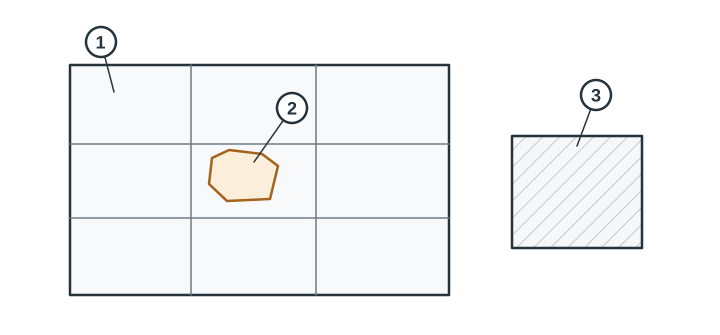 1. Existing façade. 2. Local repair in the plane of the face. 3. Separate trial area for judging colour and texture.
Agree the repaired appearance
A patch may be technically appropriate yet look different because of color, aggregate, pores, formwork pattern or aging. Sample areas help the owner and designer agree expectations for color and texture, but do not replace repair design or quality inspection. A local patch may be preferred; in other cases a larger area or surface system may suit the architecture and exposure. Preserving a thin existing skin must not prevent safe removal of loose concrete. [2]
Placement and handover
Record the existing appearance from a consistent viewpoint. Agree repair boundaries, sample area, material, finish, viewing distance and acceptance process in advance. During work, include hold points before reinforcement is covered and before any coating is applied. After curing, inspect for cracks, loose edges, color and texture differences, and drainage. A visual match does not prove bond or full removal of hidden damage.
Ask who will inspect the façade close up, how falling material is controlled, whether reinforcement has been assessed, which sample will be approved and how future changes will be documented.
See also identify concrete damage, concrete surface preparation and shotcrete repair.
Sources
- Cerema, Protection du béton, practical factsheet, February 2021, pp. 10–12: visual survey, mapping deterioration, diagnosis and avoiding surface-only treatment where corrosion has progressed. PDF.
- ACI Committee E706, Vertical and Overhead Spall Repair by Hand Application, ACI RAP-6, 2020, pp. 3–8: preparation, repair materials, finishing and inspection for vertical/overhead work; US field guide, not a color standard. PDF.
- ACI SPEC-563-25, Repair of Concrete in Buildings, public overview including mock-ups and finishing. Source.